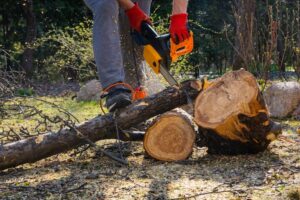
After a tree has been felled, the remaining stump can occupy useful space, create a trip hazard and make mowing or redesigning the garden difficult. The next decision is whether to grind it below ground level or excavate the entire stump and major roots.
Stump grinding and stump removal are related services, but they differ in disruption, access requirements and the condition left behind. The best choice depends on what you plan to do with the area afterwards.
Elats Ltd offers stump grinding and tree work for homeowners, landlords and commercial clients across Buckinghamshire, Milton Keynes and the surrounding region.
What Is Stump Grinding?
A stump grinder uses a rotating cutting wheel to reduce the visible stump and upper roots into small wood chips. The working depth depends on the machine, ground conditions and future use of the area. The deeper root system normally remains in the soil and gradually breaks down over time.
What Does Full Stump Removal Involve?
Full removal means excavating the stump and a significant part of the root mass. This can require digging equipment, more working space and additional reinstatement. It is far more disruptive than grinding, but it may be appropriate where foundations, drainage, hard landscaping or immediate replanting are planned.
Access and Machine Size
Garden gates, steps, narrow side passages and changes in ground level all affect the equipment that can reach the stump. A site visit allows the contractor to measure access, identify nearby services and choose a suitable machine. Photographs are helpful, but they do not always reveal underground or overhead constraints.
Which Option Causes Less Disruption?
Grinding is usually the less disruptive option because it avoids creating a large excavation. The resulting chip-and-soil mixture can be left to settle or removed and replaced, depending on the intended finish. Full removal creates a larger void that needs suitable fill and compaction before the area can be landscaped.
Can You Build or Pave Over a Ground Stump?
A ground stump should not automatically be treated as a stable base for construction or paving. Remaining organic material can decay and create settlement. If the area will carry a structure, wall, driveway or drainage run, explain the plan to the contractor and obtain appropriate building or landscaping advice.
Will the Tree Grow Back?
Regrowth risk varies by species and the condition of the remaining root system. Grinding removes the main stump but may not prevent every root sucker. The contractor can advise on likely regrowth and practical monitoring. Applying chemicals without correct identification or guidance can damage nearby planting and soil.
What Affects the Cost?
Pricing is influenced by stump diameter, species, age, access, soil, depth, the number of stumps and whether debris must be removed. Hidden metal, stones or concrete can slow the work and damage equipment. A site-specific quotation is more dependable than a price based only on the visible diameter.
Choosing the Right Finish
Think about the final use before booking the work. A lawn repair, new flower bed, replacement tree, patio or extension may each require a different depth and reinstatement. Sharing the finished design helps the tree contractor avoid doing too little or creating unnecessary disruption.
What to Prepare Before Requesting a Quotation
A useful quotation begins with accurate information. Photos and measurements can help an initial conversation, but they do not replace a survey where condition, access, compliance or hidden construction affects the recommendation. Prepare:
- the outcome you want and the problem you need to solve
- relevant photographs, drawings, manuals or previous reports
- known defects, changes and earlier repair or installation history
- access limits, operating hours and important programme dates
- questions about scope, exclusions, warranties and aftercare
Arrange Professional Stump Grinding
Elats Ltd can assess stump size, access and the intended use of the area before recommending grinding or a more extensive removal approach. Professional planning helps protect nearby surfaces, services and planting while leaving the garden ready for its next stage.