Hedges are a vital part of our landscape, offering structural beauty, privacy boundaries, and essential wildlife habitats. However, maintaining a vibrant, dense hedge requires more than just occasional trimming. Knowing when to cut back hedges is the single most important factor in promoting thick foliage and preventing woody, bare patches. Pruning at the wrong time can stress the plant, leave it vulnerable to frost damage, or disrupt local eco-systems.
For homeowners and commercial property managers, working with a specialist like Elats Ltd ensures your boundaries receive expert, health-focused care. Our NPTC-qualified climbers and arborists approach every hedge maintenance project with seasonal expertise, balancing structural aesthetics with long-term plant health.
Understanding the Legalities: The UK Nesting Season
Before picking up any tools, British property owners must consider the legal protections surrounding local wildlife. A common question for gardeners is: when can you cut hedges in the UK without breaking the law?
The Wildlife and Countryside Act 1989
Under Section 1 of the Wildlife and Countryside Act 1981, it is an offence to intentionally damage or destroy the nest of any wild bird while it is in use or being built. Because hedges are prime nesting sites, general hedge trimming should be heavily restricted during the peak breeding season.
The Royal Society for the Protection of Birds (RSPB) states that the main breeding season for wild birds runs from March 1st to August 31st. It is highly recommended to avoid any major hedge cutting during this window unless a thorough, professional inspection proves no active nests are present.
Managing High-Risk Breaches
Accidentally disturbing a nesting bird can lead to substantial fines and legal prosecution. Professional teams undergo strict nesting checks before starting any work. If a nest is discovered, work on that specific section of the hedge must be legally paused until the chicks have completely fledged.
Seasonal Guide: When to Trim Based on Hedge Type
Different plant species respond to pruning in entirely unique ways. Grouping your hedges into categories helps determine the optimal months for a trim.
Deciduous Hedges (Privet, Hawthorn, Beech)
Deciduous hedges lose their leaves in winter. They require a multi-stage approach to keep their form tight:
- Formative Pruning: Completed in late winter or early spring while the plant is still dormant. This structural cutting encourages strong upward and outward branch growth.
- Maintenance Trimming: A secondary light trim in late summer keeps the surface crisp and tidy, and a professional hedge maintenance service can help prepare your hedges for winter dormancy.
Evergreen Hedges (Leylandii, Laurel, Box, Yew)
Evergreens keep their leaves year-round and need consistent care to prevent them from growing out of control:
- Conifers and Leylandii: These species must be trimmed regularly during the growing season (between April and August).
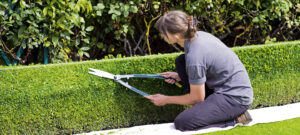
- Laurel and Beech: Best trimmed in late spring or late summer using hand shears to avoid slicing large leaves in half, which causes unsightly brown, dying edges.
How Correct Timing Boosts Hedge Health
Pruning is fundamentally a controlled injury to a plant. When executed at the correct time, it stimulates positive biochemical responses that enhance the hedge’s density and longevity.
Preventing Fungal and Bacterial Diseases
Trimming a hedge creates open wounds on the branches. If you prune during damp, humid autumn periods, fungal spores can easily land on these open cuts, leading to diseases like honey fungus or box blight. Research from the Royal Horticultural Society (RHS) shows that pruning evergreens during late spring allows the warm, dry air to dry out cut ends rapidly, reducing pathogen infection rates by up to 25%.
Avoiding Frost Damage
Pruning late in autumn stimulates a flush of tender, new vegetative growth. This young growth does not have enough time to “harden off” before the freezing winter temperatures arrive.
The Hazards of DIY Over-Trimming
Many property owners tackle hedge cutting service independently, but without proper arboricultural knowledge, it is easy to permanently damage your landscape features.
Radial Depletion and Balding
Cutting too deeply into a hedge’s canopy blocks sunlight from reaching the inner branches. Professional tree surgeons utilize precision crown reduction and reshaping techniques that allow sunlight and airflow to penetrate deeply into the core, keeping the entire structure vibrant.
Substandard Tool Management
Using dull or dirty hedge trimmer blades tears the wood fibers instead of slicing them cleanly. Torn edges leave jagged wounds that take twice as long to heal, leaving the hedge looking brown and stressed. At Elats Ltd, our teams utilize industrial-grade, fully sanitized cutting systems that guarantee clean, surgical cuts every single time.
Conclusion
Timing is everything when it comes to hedge maintenance. By aligning your trimming schedule with the natural growth cycles of your specific plant species and respecting the UK nesting season laws, you ensure your boundaries stay strong, dense, and healthy. For complex, large-scale, or overgrown hedges, trusting the certified arborists at Elats Ltd ensures a safe, pristine, and legally compliant finish that elevates your entire outdoor space.